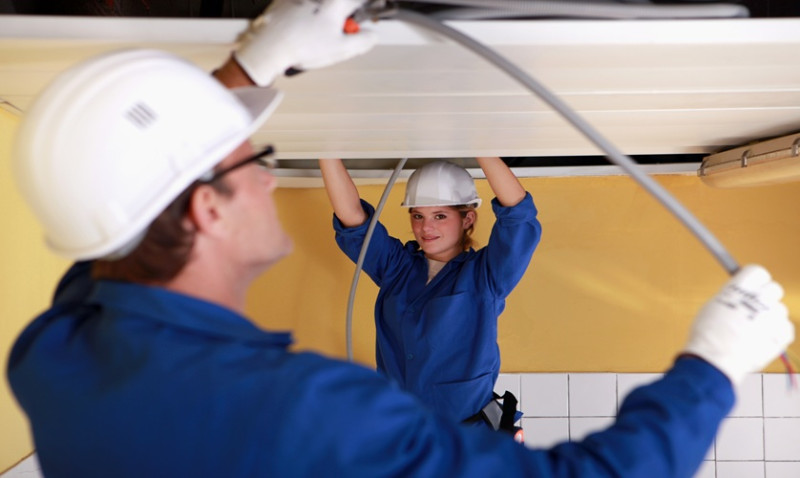
How to Choose a Electrician: 10 Questions to Ask Before You Hire
Quick answer: To choose an electrician, you should verify their NICEIC or ELECSA registration and Part P certification to ensure they meet UK building regulations. The 10 essential questions to ask include: Are you registered and certified? Will you provide a written, itemised quote? Do you have public liability insurance? What guarantees are offered? Who is doing the work? Will you provide a completion certificate? How long have you been registered? What is your safety approach? Can you provide local references? And how are overruns handled? Prioritising these checks prevents safety hazards and costly remedial work.
Hiring an electrician is one of those decisions that can feel daunting if you have never done it before. When you need to choose electrician 10 questions ask can help you separate the professionals from the amateurs. Get it right, and you will have safe, compliant electrical work that lasts decades. Get it wrong, and you could face costly remedial work, safety hazards, or insurance complications if something goes wrong.
The average cost of fixing poor electrical work runs into hundreds or thousands of pounds. More importantly, faulty electrics cause around 20,000 house fires annually in the UK. This is not about being paranoid; it is about knowing what to look for so you can hire with confidence via Electricians Around.
What Qualifications Should a UK Electrician Have?
Before we get to the questions, let us cover the baseline. In the UK, electricians do not need a single national licence, but they should hold recognised qualifications and be registered with a competent body.
Essential Accreditations
- NICEIC Registration: The National Inspection Council for Electrical Installation Contracting. This is a primary standard. NICEIC registered electricians have been vetted, insured, and assessed against strict standards.
- Part P Certification: Proves they are qualified to carry out electrical work that complies with Building Regulations. This is essential for any work beyond basic maintenance.
- City & Guilds Level 3 Diploma or equivalent: The industry standard qualification. Look for 2365 (electrotechnical technology and occupation) or 2357 (electrical installations).
- ELECSA or BSI Registration: Alternative but equally respected notified bodies for Part P compliance.
- 18th Edition BS 7671 Wiring Regulations: The current industry standard. If an electrician mentions 17th Edition, they are outdated.
Any professional will have at least NICEIC or ELECSA registration plus Part P certification. Do not accept "I have been doing this for 30 years" as a substitute for current accreditation.
The 10 Questions to Ask Your Electrician
1. Are you NICEIC/ELECSA registered and Part P certified?
This is your first filter. A yes, backed by verifiable credentials, means they are insured, regularly assessed, and held to professional standards. Ask them to provide their registration number so you can verify it independently.
2. Will you provide a written quote with itemised costs?
Never accept a vague verbal estimate. A proper quote breaks down labour, materials, call out fees, and timescale. This gives you transparency and something to compare fairly against other quotes.
3. Do you hold public liability insurance, and can you show proof?
This protects you if something goes wrong during the work. Minimum cover should be £1 million for domestic work. Request a copy of the insurance certificate. If they are uninsured and cause damage, you are liable.
4. What guarantees do you offer on the work?
Professional electricians typically guarantee their labour for 12 months and parts for the manufacturer's warranty period. Get the guarantee details in writing, including what is covered and the process for claims.
5. Who will do the actual work, you or a subcontractor?
If they are using someone else, you need assurance that person is equally qualified and insured. You are hiring the main contractor, so they remain responsible for quality.
6. Will you provide a completion certificate after the work?
For any work that affects your installation, a proper electrician issues an Electrical Installation Condition Report (EICR) or Minor Works Certificate. This is essential for insurance claims and future house sales.
7. How long have you been registered with your body, and have you had any complaints?
A long registration history suggests reliability. You can check their profile on the notified body's website to search for complaints history.
8. What is your approach to safety and Building Regulations compliance?
A good electrician will ask you questions about the property, its age, and existing installations. They should explain why certain approaches are needed, rather than just offering the cheapest option.
9. Can you provide references from recent customers, ideally local?
Local networks are tight, and reputable electricians can usually offer two or three recent references without hesitation. If they seem evasive, it is a warning sign.
10. What happens if the work takes longer than estimated?
Clarify whether quotes are fixed price or time based, what counts as unforeseen problems, and how you will be kept informed of delays to avoid hidden costs.
Which Type of Electrician Do You Need?
Not every electrician is suited for every job. Depending on your project, you may need a different specialist. You can browse local businesses to find the right fit.
- Maintenance Electrician: Best for small repairs, replacing sockets, or fixing a faulty light switch. They focus on quick fixes and general upkeep.
- Installation Electrician: Best for new builds, extensions, or full rewires. They are experts in Part P compliance and large scale wiring.
- Emergency Electrician: Best for immediate hazards like sparking boards or total power loss. Expect higher call out fees for out of hours work.
- Smart Home Specialist: Best for integrating home automation, EV chargers, and intelligent lighting systems.
Comparing Local Providers in the UK
When using a directory to find a professional, avoid the temptation to simply pick the lowest price. Electrical work is a safety critical service where quality is more important than a small saving.
How to evaluate quotes:
- Scope of Work: Ensure every quote covers the exact same tasks. One may be cheaper because they excluded the cost of the completion certificate.
- Material Quality: Ask which brands they use. Cheap components can fail sooner and may not meet the same safety standards.
- The Middle Ground: Often, the middle quote is the safest bet. Extremely low quotes may indicate cut corners, while extremely high quotes may reflect unnecessary overheads.
To find a vetted professional, you can search for qualified electricians in your specific postcode.
Red Flags to Watch For
- No identifiable registration with a notified body.
- Refusal to discuss qualifications or provide proof.
- Unwillingness to provide a written quote or completion certificates.
- No public liability insurance or reluctance to show proof.
- Pressure to pay upfront in full or requests for cash only.
- Vague answers about Building Regulations.
- No references or reviews available.
- Guaranteed "quick fixes" for complex electrical problems.
Frequently Asked Questions
Do I need a certificate for a new socket?
While a single socket might not always require a full building regulation notification, a professional should still provide a minor works certificate to prove the installation is safe.
How much does an electrician cost in the UK?
Costs vary based on location, the complexity of the job, and whether it is an emergency call out. Always request an itemised quote to understand the variables involved.
What is the difference between NICEIC and ELECSA?
Both are approved notified bodies that ensure electricians work to BS 7671 standards. Either registration is acceptable as long as the electrician is competent and insured.
Can I do my own electrical work?
Some very minor tasks are permitted, but most work in "special locations" (like bathrooms) or work that requires a building regulation certificate must be done by a qualified professional.
Trending articles
- Electrical Safety Checks in the UK: ... May 2026
-
 Electrical Safety at Home: Key Checks ...
Mar 2026
Electrical Safety at Home: Key Checks ...
Mar 2026
-
 NICEIC Approved Electricians: Why It ...
Mar 2026
NICEIC Approved Electricians: Why It ...
Mar 2026
-
 EV Charger Installation in the UK: ...
Mar 2026
EV Charger Installation in the UK: ...
Mar 2026
-
 Electrical Safety in UK Homes: What ...
Mar 2026
Electrical Safety in UK Homes: What ...
Mar 2026
-
 Electrician Costs in the UK: A ...
Mar 2026
Electrician Costs in the UK: A ...
Mar 2026